
Dock Repair & Rebuilds
Decking, stringers, pilings, framing, and marine-grade hardware - or a full storm rebuild to code.
Casey Key is old-Florida waterfront - a narrow barrier island with the Gulf on one side and Blackburn Bay and the Intracoastal on the other, where the docks live. We repair and rebuild Casey Key docks, lifts, and seawalls on that bay side, and we know the Blackburn Point stretch well. Free quote.
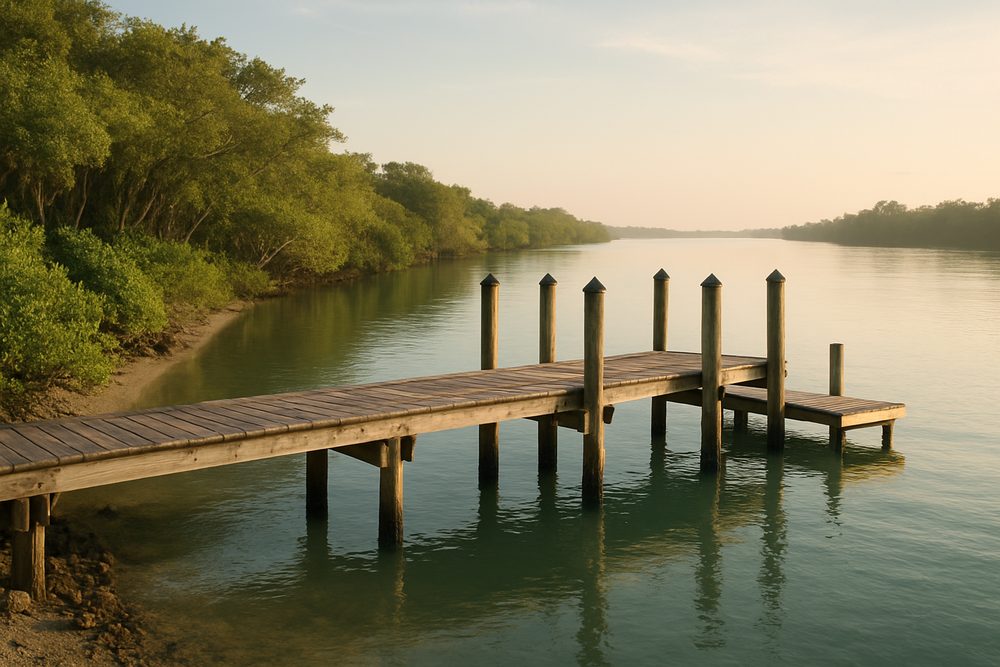
We provide dock, boat lift, and seawall repair services to homeowners and property owners throughout Casey Key, Florida. Our work covers structural inspections, timber and composite deck replacement, boat lift motor and cable service, seawall cap and panel repair, concrete restoration, and full-system rebuilds - everything a waterfront property on this barrier island may need to stay safe and functional year-round.
Casey Key is a slender barrier island south of Osprey that separates the Gulf of Mexico from Little Sarasota Bay and Roberts Bay. Unlike the denser resort strips to the north, Casey Key is almost entirely residential, quiet, and private. The island is narrow enough that many parcels have water on two sides - Gulf-front on one end and bay-front on the other - which means some property owners are managing dock and seawall infrastructure on both exposures simultaneously. The homes here range from modest mid-century Florida cottages that have been in families for generations to sprawling, architect-designed estates built in the last two decades. That mix of property age matters enormously in this trade, because a seawall poured in the 1960s behaves very differently under repair than one installed five years ago.
The permanent population on Casey Key is small and closely knit. Most residents know their neighbors, and word travels quickly about which contractors do careful work and which ones cut corners. That social reality keeps quality standards high - and it means that referrals from one property owner to the next are the most common way homeowners here find a repair team they can trust.
The physical environment on Casey Key is about as demanding as it gets for marine construction materials. The island sits fully exposed to the Gulf's southwest fetch, so bay-side docks and seawalls face the consistent chop and current that funnel through the passes and down Little Sarasota Bay. Tidal range is modest compared to the Atlantic coast, but the combination of salt air, direct sun, high humidity, and repeated storm surge events creates a corrosion and fatigue cycle that shortens the life of nearly every component - steel hardware, pressure-treated timber, concrete, and aluminum alike.
Sarasota County's rainy season runs from June through September, and tropical systems routinely push water well above normal tide levels across the island. Even storms that do not make direct landfall generate surge and wave action that overtops seawalls, scours the soil behind them, and stresses dock framing. Owners who defer post-storm inspections often discover six months later that what looked like a minor surface crack in a seawall cap had allowed saltwater to reach the reinforcing steel inside. By then, the repair is substantially more involved than it would have been the previous fall.
The sand and sediment on the bay side of Casey Key also shift over time. Tidal currents deposit and remove material from around dock pilings and seawall toes in patterns that change from year to year. A piling that was solidly embedded a decade ago may now have significantly less bearing depth because the bottom around it has scoured away. This is not something a homeowner can assess by looking at the dock from above - it requires probing or underwater inspection.
The most common calls from Casey Key come in a few recurring categories. Seawall failures and seawall cap deterioration top the list, because a large share of the island's bay-side seawalls were originally constructed decades ago and are approaching or past their design life. Horizontal cracking along the face of a concrete seawall panel, wall lean or bowing outward from hydrostatic pressure, and voids behind the wall from soil migration through failing joints are all problems we see regularly here.
Dock decking replacement is the second most frequent request. The intense UV exposure on Casey Key bleaches and dries out wood fibers faster than in shaded or inland settings, and tropical moisture then works into the checking and cracking that sun damage creates. Pressure-treated pine decking that might last fifteen years in a northern climate can be soft and punky in ten years or fewer here. Many owners are now moving to composite or PVC decking on their first or second replacement cycle because the long-term maintenance burden is lower.
Boat lift service is a steady part of the work on Casey Key as well. Cradle boats are the norm on the bay side, where residents keep center consoles, bay boats, and mid-size cruisers close to hand. Lift cables corrode at their swaged ends before the visible middle sections show obvious wear, so cable failures often come as a surprise. Motor failures, sheave wear, and bunk carpet deterioration are all routine service items. Many of the lifts on the island are 10,000- to 20,000-pound capacity units, and a lift in that weight class that has not had a full inspection in several years is carrying real risk for the boat sitting in it.
Piling replacement and sistering is the fourth common call. Wood pilings on older Casey Key docks face marine borer pressure - organisms that tunnel through submerged timber and hollow it from the inside - in addition to the surface weathering visible above the waterline. A piling can look structurally sound at deck level while being severely compromised below the waterline. Probing with a rod or a professional inspection with a hammer tap test gives a much more accurate picture than visual assessment alone.
Casey Key is accessed by a single two-lane road that runs the length of the island, with a drawbridge at the north end. That access constraint matters for material deliveries and equipment staging. Heavy materials - concrete, seawall panels, large timber sections - require careful coordination with neighbors and sometimes the county, particularly for jobs near the bridge or at the narrower southern sections of the island. A repair contractor who has not worked on barrier islands before can underestimate these logistics and cause real delays or access conflicts.
Most structural dock and seawall work in the county requires permits through Sarasota County's building and environmental departments, and projects that disturb the bay bottom or involve new structures may also require coordination with the Florida Department of Environmental Protection or the Army Corps of Engineers. The permitting timeline for a seawall replacement on Casey Key is not the same as a simple decking repair, and owners should expect and plan for that difference. Rushing permits or attempting to work around them creates title and insurance problems down the road. Our team handles the permit process as part of every qualifying project. You can learn more about the range of work we cover on our services page.
When a Casey Key owner contacts us, the first step is always a site inspection - walking the dock, probing pilings, examining the seawall face and cap, and looking at the lift hardware if there is one. We document what we find in writing and explain the findings clearly before any scope of work is proposed. For more complex jobs, underwater inspection may be part of the initial assessment. You can schedule that conversation through our free consultation page.
After the inspection, we prepare a written scope of work and discuss any permit requirements with the owner. Once the scope is agreed upon and permits are in hand where required, we schedule the work and coordinate access and staging. Most seawall cap repairs or dock decking replacements on a typical Casey Key property are completed within a few days of mobilizing, though larger seawall reconstruction projects take longer depending on cure times and panel fabrication schedules. We clean up daily and leave the dock or seawall area accessible and safe, even during multi-day projects.
The most damaging mistake Casey Key owners make is treating a visible surface symptom as the whole problem. A crack in a seawall cap is a symptom; the cause may be rebar corrosion, soil movement behind the wall, or a failing tie-back anchor rod buried in the fill. Patching the surface without diagnosing the underlying condition wastes money and delays a more serious failure by months rather than years. A thorough inspection before any repair work starts is not optional - it is the only way to write an honest scope of work.
A second common mistake is hiring a general contractor or a landscaping company to do structural marine work. Dock and seawall repair involves marine engineering principles, site-specific permitting, and material knowledge that most general contractors simply do not have. It also involves work over and in navigable water, which carries its own regulatory requirements. The common questions page on our site addresses several of these issues in plain language for owners who are comparing contractors or evaluating bids.
Finally, owners should be cautious about deferring repairs after a named storm event. Insurance adjusters on Casey Key move quickly after major storms, and documentation of the pre-repair condition is critical to a successful claim. Waiting to schedule an inspection until the busy post-storm period is well underway can mean a longer wait time and a harder time establishing the before-and-after record that a claim requires.
Casey Key property owners tend to be deliberate decision-makers. Many have owned their properties for years, understand what the marine environment does to materials, and are not looking for the lowest bid - they are looking for work that will hold up. The areas we serve page gives a broader picture of the communities we work in regularly, which helps owners understand the depth of local experience we bring to each project. Knowing the specific tidal patterns, soil conditions, permitting timelines, and access logistics on Casey Key is not something a contractor picks up on a first visit. It comes from doing this work on the island repeatedly, across different property types and different storm seasons.
The relatively small size of the Casey Key waterfront community also means that our work is visible to neighbors. A seawall cap we poured, a dock we rebuilt, or a lift we serviced is likely to be seen and evaluated by the owner's neighbors when they are out on the water. That kind of community visibility is, frankly, the best quality control there is.
Casey Key sits between Nokomis to the north and Englewood to the south, with Osprey and its extensive bay-front communities directly inland across the bay. The same tidal and storm conditions that shape dock and seawall wear on Casey Key affect all of these neighboring areas. Owners in Nokomis, on the mainland shores of Roberts Bay, or along the Intracoastal in Osprey face very similar challenges and often call us after seeing work we have completed on the island. The areas we serve index lists the full range of communities where we work throughout Sarasota County.
Decking, stringers, pilings, framing, and marine-grade hardware - or a full storm rebuild to code.
Cables, bunks, motors, and gearboxes serviced or replaced - or a new lift sized to your boat and water depth.
Cap repairs, cracked panels, tie-back anchors, and rip-rap that stop the erosion before it takes the yard.
Piling repair and wraps, dock lighting and lift wiring, plus maintenance plans that catch trouble early.
Outward lean on a Casey Key bay-side seawall is a sign of hydrostatic pressure building behind the wall, often from soil migration through failing panel joints or a deteriorating tie-back system. It is not always an emergency on day one, but it will not self-correct and typically accelerates once it begins. A professional inspection within a few weeks - not a few months - is strongly advisable before the next storm season adds more pressure to an already compromised wall.
In Casey Key's combination of warm saltwater, intense UV exposure, and marine borer activity, pressure-treated timber pilings commonly show meaningful deterioration in the 15-to-25-year range, though some fail earlier depending on original treatment grade and installation depth. The challenge is that failure usually progresses below the waterline first, where it is not visible from the dock surface. A hammer-tap and probe inspection every few years is the only reliable way to assess actual condition.
Most structural work does, yes. Seawall reconstruction, major cap replacement, and new dock framing typically require Sarasota County building permits and may involve the Florida DEP or the Army Corps of Engineers if the work affects navigable water or bay bottom. Cosmetic deck board replacement on an existing structure sometimes qualifies as a repair exempt from full permitting, but that determination should be made before work begins, not after. We handle permit coordination as part of every qualifying project.
Cable replacement alone is possible and sometimes appropriate, but a cable failure on a Casey Key lift is almost always a signal that the rest of the hardware deserves a close look. Sheaves, drum grooves, and swaged cable ends all corrode on the same timeline as the failed cable. Replacing cables without inspecting the motor mounts, sheave condition, and bunk structure risks a second failure shortly after. We inspect the full lift system any time we open one up for cable work.
A pre-purchase or early-ownership inspection is one of the best investments a new Casey Key owner can make. Older docks on the island frequently have a mix of original and patched components, and the condition below the waterline is rarely reflected in how the deck surface looks. An inspection documents the actual structural condition of pilings, framing, decking, and any lift equipment, and gives you a clear priority list rather than surprises. Our [free consultation](/contact) is a good starting point.
Access on Casey Key runs through one two-lane road with a drawbridge at the north end, which does affect material deliveries and equipment staging, particularly for larger jobs. Experienced contractors plan around bridge openings, coordinate with neighbors for staging space, and schedule heavy deliveries in off-peak hours. It adds a logistics layer that contractors unfamiliar with barrier island work may not anticipate. We factor island access into every Casey Key project schedule and materials plan from the start.

A leaning piling doesn't always mean disaster, but it's never something to ignore. Here's how to read what your pilings are telling you, what causes them to lean in Sarasota's waterways, and when you need to act fast.

Sarasota's heat, humidity, and salt air are brutal on dock decking. Here's what's actually causing your boards to cup, crack, or throw fasteners - and what to do about it before the damage spreads.

King tides push Sarasota's waterways well above normal high-water marks, testing every seawall in ways that ordinary tides never do. Here's what's happening inside your wall during a king tide - and the specific signs that tell you whether it passed or failed.
Get your Casey Key dock, lift, or seawall looked at before the next big tide. Free, no-pressure on-site quotes - usually within a couple of days.