
Dock Repair & Rebuilds
Decking, stringers, pilings, framing, and marine-grade hardware - or a full storm rebuild to code.
Venice boating runs from the gulf-access canals of Venice Island to the Intracoastal and South Venice's ferry community - and a lot of it is older wood docks due for work. We repair and rebuild Venice docks, lifts, and seawalls, and we know the difference between gulf-access and freshwater canals here. Free on-site quote.
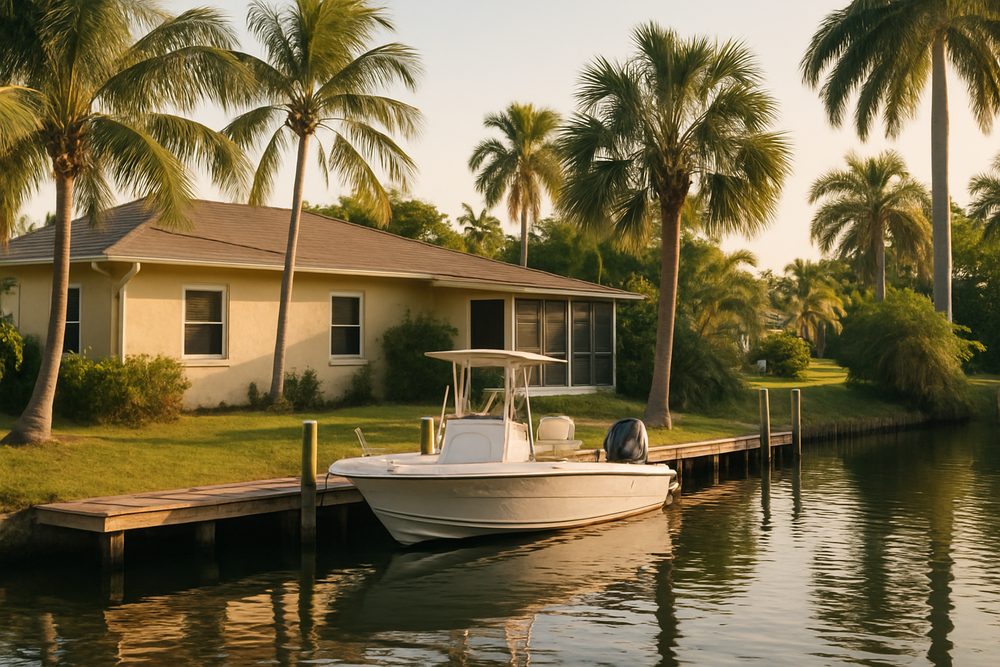
We provide dock, boat lift, and seawall repair services throughout Venice, Florida, covering everything from routine wood and composite deck replacement to full seawall reconstruction and boat lift motor overhauls. Our crews work on canals, lagoons, and Gulf-adjacent properties across the Venice area, and we handle permitting, inspections, and coordination with Sarasota County from the first call through final sign-off.
Venice sits on a narrow barrier island and a stretch of mainland directly south of Sarasota, separated from the Gulf of Mexico by the Intracoastal Waterway and laced with tidal canals that finger into residential neighborhoods on both sides of US 41. The city has a long history as a planned community - the original 1920s design gave Venice a coherence and density of older construction that few Florida coastal towns can match. That heritage matters in this trade, because it means a meaningful share of the docks, seawalls, and boat lifts in Venice were installed decades ago, many of them well past the service life that Florida's salt environment allows.
The waterfront properties here span a wide range. On the island itself, homes sit close to the water on relatively narrow lots, with seawalls that run directly along tidal canals connected to Roberts Bay and the Intracoastal. On the mainland side, neighborhoods around Venetian Waterway Park and the canals feeding into Dona Bay and Shakett Creek have a different character - deeper lots, more mature landscaping, and a mix of original mid-century homes and newer construction. Both settings generate their own demands on marine structures, and understanding that difference shapes every repair plan we put together.
The Gulf Coast climate around Venice is relentless on marine structures. Salt air and tidal fluctuation work constantly on metal hardware, wood pilings, concrete seawall caps, and lift cables. Venice averages a long, hot, and humid summer followed by a mild but still wet winter, and the cumulative effect of year-round moisture is accelerated corrosion, wood rot, and concrete spalling that would surprise homeowners who moved here from drier climates.
Storm season is a real and recurring driver of repair work in Venice. The area sits in a zone that has experienced significant surge events, and even storms that do not make direct landfall can push water levels two to four feet above normal tide, stressing seawall tie-back systems, lifting dock sections off their pile caps, and depositing debris that damages lift bunks and cables. After a major wind event, our phones reflect it immediately - the demand for assessments and emergency repairs spikes across every waterfront neighborhood in the city.
The age of the housing stock matters just as much as the weather. A large share of Venice's waterfront homes were built in the 1960s, 1970s, and 1980s. Concrete seawalls installed in that era are now 40 to 60 years old. The steel reinforcement inside those walls - the rebar that gives them tensile strength - corrodes over time as saltwater infiltrates hairline cracks in the concrete face. When rebar corrodes, it expands and spalls the concrete outward, which is the telltale cratering pattern you see on older seawalls throughout Venice's canal neighborhoods. Left unaddressed, a seawall in that condition will fail. The question is when, not if.
The most common calls we receive from Venice homeowners fall into a few consistent categories. Seawall repair and replacement leads the list, driven by the age of the existing walls and the combination of tidal pressure and storm surge. Homeowners often notice the problem through secondary signs first - a strip of land sinking along the seawall face, voids opening up behind the cap, or the cap itself cracking and tilting waterward. By the time those signs appear, the repair is urgent.
Dock repair and replacement is the second major category. Venice's canal properties frequently have older wood docks - pressure-treated pine or the older creosote-treated timber that was standard before modern alternatives. Those materials have a finite life in salt water, and we see a steady stream of work involving rotted stringers, broken or leaning pilings, compromised decking, and corroded hardware. Composite and aluminum replacement decking is now the preferred material for most Venice property owners because of its dramatically longer service life in the coastal environment.
Boat lift repair rounds out the bulk of our Venice work. Many lifts in the city are cable-drum systems installed in the 1990s and early 2000s, and their motors, cables, and sheaves are overdue for service. Corroded cables are a safety hazard - they do not fail gradually and give warning; they fail suddenly under load. Motor replacements, cable replacements, bunk adjustments for different hull configurations, and control upgrades are all common lift jobs we perform on Venice properties. For a full picture of everything we handle, see our services page.
Access and logistics in Venice require planning. On the island, tight lot lines and limited street width mean that material deliveries and equipment positioning have to be thought through in advance. We typically stage material off the water when possible, arriving by boat to avoid disrupting narrow residential streets and to protect landscaping along the seawall. On the mainland canal neighborhoods, truck access is generally easier, but the canals themselves can be shallow during low tide, which affects how we time barge or skiff movements.
Permitting in Venice falls under Sarasota County jurisdiction for unincorporated areas and the City of Venice for properties within city limits - the boundary matters, and misidentifying it is one of the errors an inexperienced contractor can make. Both jurisdictions require permits for seawall repair or replacement and for dock construction or significant alteration. The Florida Department of Environmental Protection and, depending on the scope of the work, the Army Corps of Engineers may also have a role for projects affecting navigable waters or submerged land. We handle that permitting process on your behalf, which is one of the reasons our common questions page addresses it in detail - homeowners understandably have questions about timelines and what triggers different agency reviews.
For a Venice homeowner reaching out for the first time, the process starts with a free, on-site assessment. We walk the seawall, inspect the dock framing and decking, examine the lift hardware and controls, and look at the pilings for rot, marine borer damage, and lean. We photograph and document everything. From that visit, we put together a written scope of work with options - because in many cases there is more than one reasonable path, ranging from targeted repair to full replacement, and we want the homeowner to understand the trade-offs before committing. You can schedule that first visit through our free consultation page.
Once scope and contract are agreed on, we pull permits and coordinate the inspection schedule. Lead times on permits in Sarasota County and the City of Venice vary by project type and current department workload, so we build that reality into the project timeline honestly rather than overpromising. Construction on most dock and seawall projects runs from a few days for smaller repairs to two to three weeks for a full seawall replacement with new cap and dock rebuild. We keep the property owner informed at each stage and do not disappear between permit approval and construction start.
The single most common mistake Venice waterfront owners make is waiting too long. A seawall with hairline cracking and early rebar corrosion can often be repaired with crack injection, tie-back reinforcement, and a new cap - a fraction of the cost of full replacement. The same wall ignored for another three to five years may require complete demolition and reconstruction. Early intervention almost always costs less and causes less disruption to the yard and landscaping behind the wall.
Hiring a contractor without verified experience in the specific permit jurisdiction is another real risk in Venice. Someone who typically works in Charlotte County or Lee County will not necessarily know the City of Venice's review process or Sarasota County's environmental setback rules. A permit pulled incorrectly, or work done without the required permit, can create problems at the time of property sale - title companies and buyers' attorneys look at seawall and dock permits, and unpermitted work can delay or derail a closing. Working with someone who knows the areas we serve across Sarasota County is the straightforward way to avoid that problem.
Venice's waterfront community is multigenerational in a way that is uncommon even by Florida standards. Families who bought on the canals in the 1970s are now the grandparent generation, and their adult children often take on the maintenance decisions. Word of mouth carries significant weight in this community, and a contractor's reputation on one canal spreads quickly to the next. Venice homeowners tend to do their research, ask detailed questions, and expect straight answers - which suits the way we work.
The stakes on waterfront property are also simply higher here. A failed seawall does not just cost money to repair - it can destabilize the yard behind it, undermine a pool deck or patio, and in severe cases compromise the foundation of the structure above. Dock and lift failures carry their own hazards, including the risk to vessels and people using them. The investment in a qualified, permitted, experienced contractor is not an abstract concept on a Venice canal; it is a direct protection of property value and personal safety. For questions about where we work and what is covered in your area, the areas we serve page is the right starting point.
Venice's waterfront extends into communities that residents often think of as distinct but that share the same canal systems and the same repair demands. Nokomis, just north of Venice along the Intracoastal and bordering Dona Bay, has a particularly active boating community with older seawalls in similar condition to Venice proper. South Venice, the large unincorporated area south of the city limits, has a private ferry and a concentration of waterfront properties on canals that connect to Dona Bay and Lemon Bay. Englewood, further south toward Charlotte County, sits at the edge of our service area but is reachable for significant projects. All of these communities fall within the range of conditions - aging seawalls, Gulf-influenced tidal canals, post-storm repair demand - that define waterfront work in the Venice area.
Decking, stringers, pilings, framing, and marine-grade hardware - or a full storm rebuild to code.
Cables, bunks, motors, and gearboxes serviced or replaced - or a new lift sized to your boat and water depth.
Cap repairs, cracked panels, tie-back anchors, and rip-rap that stop the erosion before it takes the yard.
Piling repair and wraps, dock lighting and lift wiring, plus maintenance plans that catch trouble early.
Not necessarily. A tilting cap with surface cracking often means the tie-back system behind the wall has failed or the panels have shifted, but the panels themselves may still be serviceable. We assess the wall from both the land and water side before recommending anything. In many Venice properties built in the 1970s and 1980s, targeted reinforcement and a new cap is a legitimate repair rather than full replacement - but it requires an honest on-site evaluation to know for certain.
It depends on whether your property falls within the City of Venice limits or the unincorporated Sarasota County jurisdiction, and on the scope of work. Minor repairs can move through relatively quickly, while full seawall replacements that touch submerged land or navigable waterways may also require Florida DEP or Army Corps review, which adds time. We identify the correct jurisdiction and applicable agencies at the assessment stage and give you a realistic timeline before any work begins.
Keep everyone off the lift and away from the vessel until a technician assesses the remaining cables and hardware. A single cable failure often means the others are at or near the same wear point, especially on older drum systems common throughout Venice's canal neighborhoods. Do not attempt to operate the lift with remaining cables under load. We treat cable failures as urgent calls and prioritize them because the risk of additional failure - and vessel damage - is real while the boat is in an unsupported position.
We begin storm-response assessments as soon as road and water access allows following a storm event. Venice's island and mainland canal properties both see significant demand after major wind or surge events, so we prioritize documented damage - particularly where a compromised dock or seawall poses a safety hazard or risk of further loss. Contacting us immediately after a storm, even before you know the full extent of the damage, gets you into the queue and helps us allocate crews efficiently.
For most Venice property owners, yes. Pressure-treated wood decking in a tidal saltwater environment typically lasts 10 to 15 years before it needs significant work. Quality composite decking lasts significantly longer with minimal maintenance, does not splinter, and holds up better through the repeated wet-dry cycles that Venice's canal properties experience year-round. The higher upfront cost is usually offset within two replacement cycles of wood, and composite adds appeal for property buyers who know what to look for.
It can, and it does more often than sellers expect. Title searches and buyers' attorneys in Venice look at permit history for docks, seawalls, and boat lifts, and unpermitted work surfaces during that review. It can trigger a requirement to permit and inspect the existing work retroactively, or in some cases to remove and rebuild to current code. Addressing it before you list is far less disruptive than negotiating it mid-transaction. We can assess what exists and guide you through the correct process.

A leaning piling doesn't always mean disaster, but it's never something to ignore. Here's how to read what your pilings are telling you, what causes them to lean in Sarasota's waterways, and when you need to act fast.

Sarasota's heat, humidity, and salt air are brutal on dock decking. Here's what's actually causing your boards to cup, crack, or throw fasteners - and what to do about it before the damage spreads.

King tides push Sarasota's waterways well above normal high-water marks, testing every seawall in ways that ordinary tides never do. Here's what's happening inside your wall during a king tide - and the specific signs that tell you whether it passed or failed.
Get your Venice dock, lift, or seawall looked at before the next big tide. Free, no-pressure on-site quotes - usually within a couple of days.